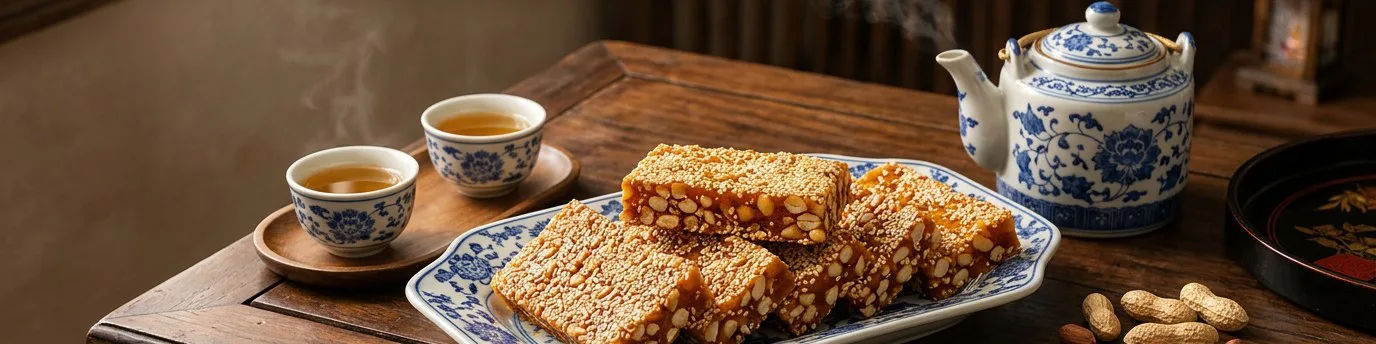
Whenever travelers speak of Thai Binh Province, their minds naturally turn to endless emerald rice paddies, the sacred Tran Temple complex, and the ancient architecture of Keo Pagoda. Yet among all these cultural treasures, one gastronomic symbol leaves an indelible impression on every visitor: the rich, aromatic pastry of Nguyen village. Celebrating Thai Binh homeland of Cay cake means honoring the legendary "land of five tons per hectare," where fertile alluvial soil and centuries of culinary artistry converge in a single humble confection.
Crossing into the Cradle of Nguyen Village Craftsmanship
Even without reading roadside boundary markers or asking directions along the winding provincial highways past Nam Dinh, travelers immediately know when they have set foot in Thai Binh. Rows of welcoming shopfronts displaying red-and-gold boxes of Banh Cay line the route, inviting passersby to pause and sample the region's pride.
This beloved specialty is crafted by the skilled hands of artisans in Nguyen village, located in Nguyen Xa commune, Dong Hung District, Thai Binh Province. From the center of Thai Binh City, a short ten-kilometer journey along National Highway 10 followed by a turn onto Highway 39 brings visitors straight to the gates of Nguyen village. Renowned nationwide as one of the historic cradles of Vietnamese water puppetry, this vibrant rural community is equally famous for the enduring development of the Cay cake craft that once supplied tribute delicacies to the royal court.
The Royal Legend Behind the Name Banh Cay
Village elders recount that families in Nguyen Xa have prepared this festive confection for hundreds of years, originally reserving it for Lunar New Year altars and village celebrations. According to local folklore, during the reign of Emperor Le Hien Tong in the mid-eighteenth century, court officials passing through the region were offered the village's homemade ginger-and-rice pastry as a gesture of rural hospitality. Impressed by its complex flavor and jewel-like colors, a mandarin presented the delicacy to the royal palace in Thang Long.
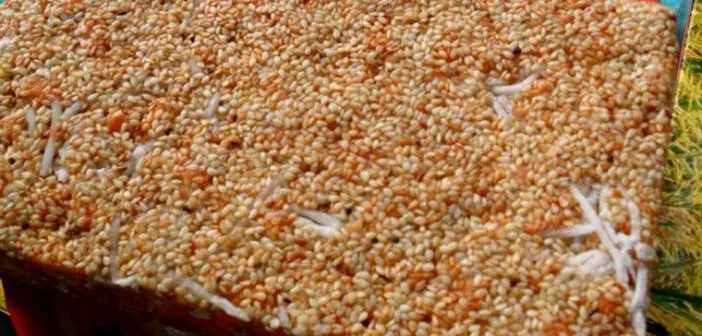
When the Emperor tasted the fragrant, lightly spiced square and inquired about its name, the courtier observed how its speckled orange, yellow, and creamy-white bits resembled the roe of small estuarine fiddler crabs (con cay) and replied that it was called Banh Cay. Delighted by both the name and the flavor, the monarch praised the dish and rewarded Lady Nguyen Thi Tan, the court tutor and native of Nguyen Xa who had perfected the recipe. From that royal endorsement onward, the delicious Cay cake of Thai Binh gained renown across the northern delta as a noble yet accessible country specialty.
Meticulous Preparation From Alluvial Farm Harvests
Creating an authentic batch of Banh Cay is a labor-intensive process that begins with selecting peak-season agricultural ingredients. The foundation is Nep Hoa Vang (golden blossom glutinous rice), accompanied by ripe gac fruit, gardenia seeds, shelled peanuts, white sesame seeds, fresh carrots, mature ginger, aromatic tangerine peel, and cured pork back fat.
- Three-part rice preparation: Artisans divide the glutinous rice into three distinct portions. The first portion is steamed with crimson gac fruit pulp; the second is steamed with golden gardenia seed infusion; and the third is dry-roasted in cast iron until the grains pop into airy white blossoms with the husks cleanly sifted away.
- Shaping the "Cay eggs": The red and yellow steamed sticky rice batches are pounded smooth in a mortar, rolled flat, sliced into tiny strips resembling pumpkin jam, and deep-fried in rendered lard until crisp.
- Curing and caramelizing fillings: Pork fat is cured in sugar and salt for fifteen days before being diced and sautéed until translucent and crunchy. Fresh carrots are simmered in sugar syrup and ginger water, while peanuts and sesame seeds are slow-roasted and rubbed clean of their skins.
Once all components are ready, the master baker combines them in a heated pan with golden cane sugar and malt syrup, stirring steadily until the mixture binds together. The warm mass is poured into sesame-lined wooden frames and pressed firmly into dense blocks. Every step highlights the unique culinary qualities of Cay cake that distinguish it from ordinary rice candies.
Balancing Modern Tools with Ancestral Standards
In recent decades, mechanical mixers, roasting drums, and hydraulic presses have relieved Nguyen village artisans of the most exhausting physical labor. Nevertheless, the heart of the craft still depends on human judgment: calibrating the exact ratio of malt, ginger, and roasted grains so that the finished cake is neither overly sweet nor bland, remaining supple without ever feeling greasy or dry.
A true Nguyen village pastry offers a harmonious chewiness, gentle sweetness, nutty roasted sesame aroma, and the invigorating warmth of fresh ginger. It represents the crystallization of fertile delta soil, fragrant rice harvests, and the devoted craftsmanship of Thai Binh farmers. You can browse our cultural characteristics archive to learn more about how this pastry shapes local hospitality during winter reunions, when families gather around a steaming blue teapot to share slices of Banh Cay and celebrate the enduring warmth of home.