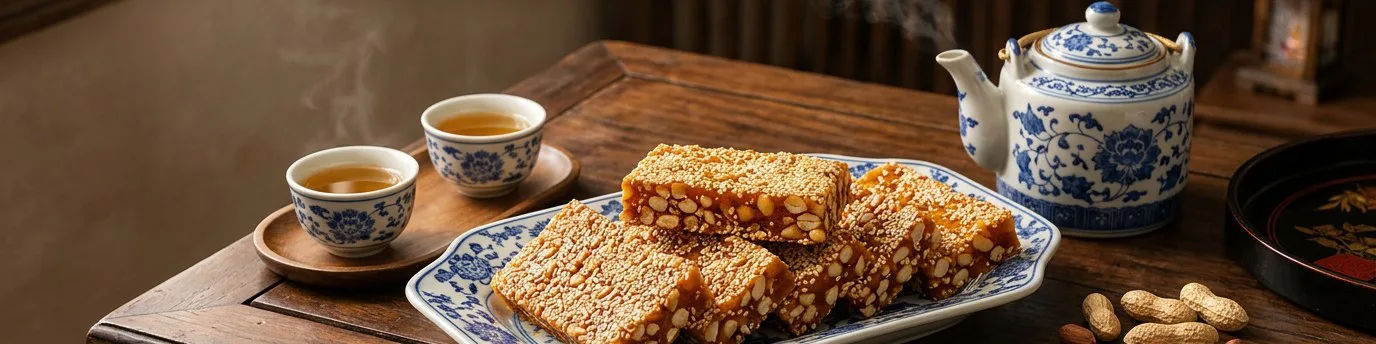
During the crisp, misty days of late December, anyone riding a passenger coach along the Nam Dinh to Hai Phong route cannot help but notice an unbroken line of colorful signboards advertising "Nguyen Village Cay Cake" stretching along National Highway 10 from the moment the bus crosses into Dong Hung District, Thai Binh Province. That visual welcome is the traveler's first introduction to the fascinating flavor of Cay cake, a culinary hallmark that defines the winter landscape of the Red River Delta.
Highway 10 Signboards and the Gateway to Nguyen Xa
Spend even a few days in Thai Binh and locals will proudly tell you that travelers never need border markers or road maps to know when they have left Nam Dinh behind. The sudden appearance of dozens of specialty stalls framed against vast green rice paddies announces that you have arrived in the homeland of Banh Cay.
These celebrated pastries are crafted by the dedicated families of Nguyen village in Nguyen Xa commune, Dong Hung District. Traveling from Thai Binh City along Highway 10 and turning left onto Highway 39 leads visitors directly to the village entrance gate, where the warm, toasted aroma of glutinous rice, ginger syrup, and roasted sesame hangs in the breeze. Over generations, this humble rural product has become the cherished gift of every Thai Binh household whenever guests visit or relatives travel afar.
From Royal Tribute to Everyday Culinary Pride
At first glance, a slice of Banh Cay reveals an intricate mosaic of creamy-white popped rice, golden gardenia-dyed strips, and coral-pink gac dough specks that closely resemble the tiny eggs of coastal fiddler crabs. Centuries ago, farmers in Thai Binh perfected this confection to present as a royal tribute to the imperial court. Although the king's praise elevated Nguyen village to national fame, locals rightly note that it was the pastry's inherent quality and the distinctive features of Thai Binh Cay cake that kept the tradition thriving across centuries.
Traditional Ingredients and the Art of Pressing the Cake
While modern equipment has eased the heavy labor of pounding and pressing over the past decade, master bakers strictly preserve the ancestral ingredient list so every square slice retains its authentic character:
- Golden blossom sticky rice (Nep Hoa Vang): Soaked, steamed with ripe red gac fruit pulp, pounded until elastic, diced, and dried into tiny morsels known locally as "Cay eggs."
- Popped glutinous rice (Bong nep): Dry-roasted in deep cast-iron pots until the grains burst into snowy white puffs.
- Candied pork fat and coconut: Choice cuts of pork fat and ribbons of mature coconut marinated in sugar for half a month until translucent, then flash-fried with the dried rice morsels in hot oil.
- Slow-simmered malt and aromatics: Golden malt syrup cooked over glowing charcoal and blended with candied winter melon, roasted peanuts, julienned fresh ginger, and a drop of pomelo blossom essence.
Once the heated malt binds the ingredients into a fragrant, cohesive mass, artisans transfer the mixture into wooden trays, press it flat while still piping hot, and blanket the surface with toasted sesame seeds and crushed peanuts. After cooling, the slab is cut into neat squares and sealed in protective boxes, typically priced between 35,000 and 60,000 VND per box depending on size and grade.
Why Winter and Spring Magnify the Pastry's Appeal
The true secret of a Nguyen village baker lies in judging the exact moment to fold and press the warm mixture so the pastry turns out supple and tender rather than hard or overly sweet. Because Banh Cay carries a rich concentration of warming ginger and toasted grain aromas, it is ideally suited to the brisk chill of late winter and early spring, making it a meaningful gift for loved ones during seasonal reunions.
Every traveler carries home a lasting memory from the northern countryside. In Thai Binh, that memory is sitting in a quiet courtyard on a dewy January morning as cool mist drifts across the fields, sharing a plate of spiced Banh Cay and a steaming cup of thick green tea with honest, hospitable village hosts. Visit our cultural news and stories archive for more reflections on Vietnam's living culinary traditions.