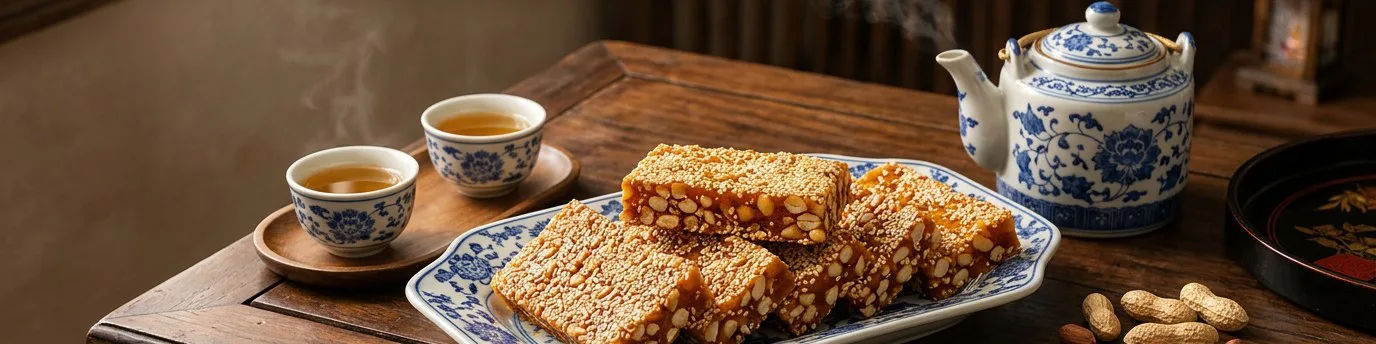
Every region of Vietnam treasures a signature culinary gift that captures the spirit of its land and people. Understanding the defining feature of Thai Binh Cay cake begins with recognizing how deeply this pastry reflects Vietnam's historic rice bowl. In Nguyen village, master bakers rely entirely on wholesome local harvests: golden-flower glutinous rice, dried tangerine peel, white sesame seeds, shredded coconut, spicy ginger, crimson gac fruit, sugar-cured pork fat, cane sugar, and golden malt syrup.
Artisanal Technique and Evolving Presentation
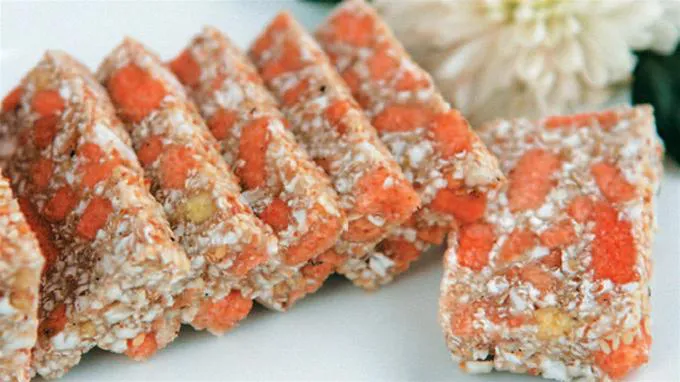
While dry-roasted glutinous rice ground into fragrant powder forms the comforting base of the confection, the true artistry lies in the cooking and texturing process. Bakers knead steamed glutinous dough infused with gac fruit oil and ginger juice, roll it compact, and shred it into slender matchsticks—much like home cooks julienning kohlrabi for traditional pickles—before frying the dried strands until they puff into airy crisps. These colourful crisps are then folded into bubbling cane sugar and malt syrup, poured into wooden frames, and pressed into uniform blocks, demonstrating how Cay cake encompasses the finest agricultural specialties of Thai Binh.
Half a century ago, traditional village workshops molded the pastry into long slabs measuring nearly a meter in length and wrapped them in festive crimson paper. Today, to suit modern travelers and everyday tea tables, producers package the confection in neat 200-gram to 300-gram rectangular trays sealed in protective film and printed with the respected family brand names of Dong Hung District. Breaking off a bite-sized piece with your fingers reveals a rich, nutty, lightly spicy, and satisfyingly chewy texture that serves equally well as an elegant tea accompaniment or a wholesome, affordable countryside snack.
From Tan De Ferry Memories to Nationwide Renown
Generations of travelers still fondly remember crossing the Red River at the historic Tan De ferry terminal fifty years ago, where lively vendors welcomed passengers with warm parcels of freshly pressed village pastry. Today, a modern highway bridge spans the river at Tan De, and streams of buses and cars glide smoothly into the province, yet roadside stalls and bustling town markets remain lined with golden boxes of this beloved specialty, a highlight of our regional characteristics archive.
Over the decades, boxes of this fragrant ginger confection have accompanied Thai Binh farmers and entrepreneurs as they settled across the Northwest highlands, the Central Highlands, Saigon, and the southern delta. Just as green bean cake immediately evokes Hai Duong and fermented pork roll (nem chua) recalls Thanh Hoa, tasting a slice of this pastry brings instant memories of the Red River plains and explains why Cay cake makes people passionate about their homeland roots.
Although bakeries across the province now produce the confection, connoisseurs agree that Nguyen Xa village remains the most authentic source. Renowned throughout history for its community resilience and deep cultural pride, Nguyen village invites visitors to tour its family workshops, pay respects at the temples honoring the ancestor of Cay cake, and listen to inspiring local stories over a steaming cup of green tea.