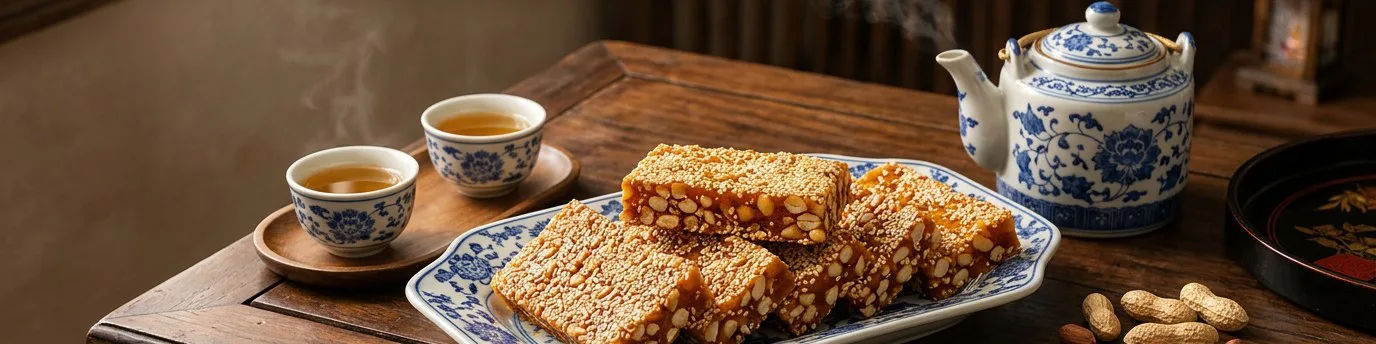
Traveling from Thai Binh city along National Highway 39 toward Dong Hung district, visitors arriving at Nguyen Xa commune are immediately greeted by the warm scent of toasted glutinous rice, caramelized malt, and roasted sesame drifting from village courtyards. That unmistakable aroma announces that you have entered the ancestral homeland of spicy and fragrant Cay cake Thai Binh, where family workshops have perfected Vietnam's most distinctive countryside pastry for hundreds of years.
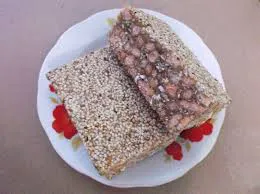
Folk Legends and Agricultural Roots in Nguyen Village
Every bar of authentic Cay cake is crafted entirely from familiar farm produce harvested across the Red River Delta, including golden flower sticky rice, candied winter melon, mature coconut flesh, white sesame seeds, and plump groundnuts. In Nguyen village, elders still pass down moving folk tales alongside historical chronicles to explain how this humble home-baked treat earned its enduring name and reputation.
According to local legend, a hardworking village woman who toiled in the rice paddies year-round created a warming, ginger-spiced glutinous rice pastry to ward off the winter chill. When she presented her creation to the royal court, the king praised its harmonious balance of sweetness and heat, bringing lasting renown to Nguyen village. Folk tradition recounts that after she passed away, the coastal waves parted gently to welcome her spirit, and villagers named their beloved pastry in memory of the tiny coastal crabs of their homeland and the matriarch who founded their craft.
Stepping inside a multi-generational workshop in Nguyen Xa today reveals how deeply villagers honor this heritage. Every ingredient is selected with uncompromising care: aromatic nep cai hoa vang glutinous rice, ripe red gac fruit, gardenia blossoms, roasted peanuts, white sesame, sugar-cured pork fat, thinly sliced coconut, candied winter melon, maltose syrup, and pure pomelo flower essence. You can explore more regional traits across our specialty characteristics archive.
A Half-Month Preparation Process and Modern Craftsmanship
To witness the complete production cycle of a truly great batch of pastry, a visitor would need to stay in Nguyen village for at least half a month. That two-week window is required simply to marinate diced pork fat and young coconut ribbons in refined white sugar until the pieces turn translucent, crisp, and crystalline. Meanwhile, the baker prepares two distinct forms of glutinous rice that give the cake its complex texture:
- Crispy Colored Granules: Soaked golden flower sticky rice is steamed with gac fruit and gardenia extract, pounded into smooth dough, rolled out, diced into tiny cubes, dried thoroughly, and fried in hot oil until golden and crisp.
- Popped Rice Blossoms: Whole unhusked glutinous paddy is dry-roasted in a heavy cast-iron cauldron until the grains burst open into light, airy white puffs known locally as bong nep.
- Warm Caramel Binding: Maltose syrup is melted slowly in a large wok before the fried granules, popped rice, cured pork fat, coconut, winter melon jam, shredded ginger, and pomelo blossom oil are folded together by hand, pressed into sesame-lined wooden frames, and cut while still warm.
The Unforgettable Harmony of Ginger, Sesame, and Hot Tea
In earlier decades, every single step of how to make delicious Thai Binh Cay cake was performed entirely by hand. As demand grew across provinces from North to South, modern kneading, frying, and pressing equipment was introduced to help village bakers reduce physical strain while meeting nationwide orders. Yet machines can never replace the artisan's intuition—knowing the exact moment when the malt reaches the proper elasticity so the finished bar is neither too soft nor overly hard.
When you bite into a slice of spicy and fragrant Cay cake Thai Binh, your palate encounters a remarkable symphony of textures: the gentle chewiness of popped rice, the crisp snap of candied winter melon and cured fat, the nutty richness of roasted peanuts and sesame, and the invigorating warmth of fresh ginger. Enjoyed alongside a steaming cup of green tea, it embodies the traditional Tet flavor of Thai Binh people. Wherever Thai Binh natives travel to build their lives, they carry this unforgettable Cay cake flavor as a proud gift and place it reverently upon family ancestral altars during every festival, reminding younger generations of their roots in the peaceful rice paddies of home.