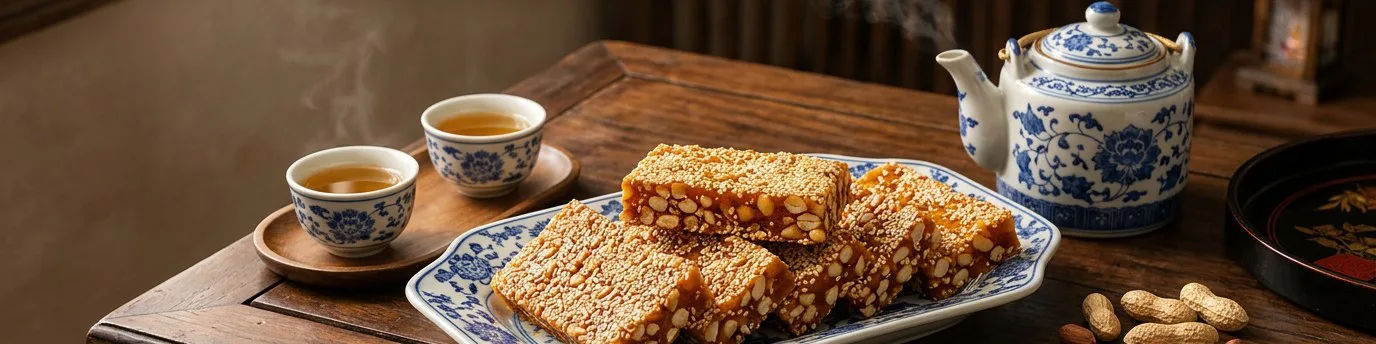
More than just a sweet accompaniment to green tea, the Cay cake rustic soul embodies the patience, ingenuity, and warm hospitality of farming families in Nguyen Village, Nguyen Xa Commune, Dong Hung District. Shaped by the skilled hands of rural artisans from everyday harvests of the Red River Delta, each rectangular bar unites crisp popped rice, nutty roasted peanuts, translucent sugar-cured pork fat, and chewy barley malt infused with spicy fresh ginger. During the brisk winter months, sharing a plate of sliced pastry beside a steaming teapot brings immediate warmth and comfort. Discover more reflections on local heritage in our cultural meaning archive.
From Humble Paddy Fields to Royal Tribute
In centuries past, this folk confection was chosen by the people of Thai Binh to present as a tribute to the feudal court. Visitors who examine the pastry closely often marvel at how simple countryside crops could be elevated into a dish worthy of emperors. For a deeper look at how the delicacy got its intriguing title, read our article on the meaning of the name Cay cake, which explains how the speckled orange, yellow, and creamy-white granules inside each slice reminded villagers of tiny freshwater fiddler crab eggs along the riverbanks.
A Symphony of Crops from Village Gardens
What defines the unique things about Cay cake is the way every single ingredient comes directly from village fields and home gardens, with each raw material undergoing its own dedicated preparation:
- Colored Glutinous Rice Dough: Golden flower sticky rice is split into two portions—one steamed with ripe red gac fruit extract to create a rose-coral tint, and the other steeped in gardenia water for a bright golden hue. Both are pounded smooth in stone mortars, rolled flat, sliced like winter melon jam, dried, and fried in boiling fat until they puff into crisp, savory shells.
- Popped Golden Flower Paddy: A third portion of unhusked Nep Hoa Vang paddy is dry-roasted in cast-iron pans until the grains burst open into fragrant white blossoms, which are sifted clean of husks.
- Candied Pork Fat and Orchard Aromatics: Choice pork fatback is cured in sugar and salt for more than two weeks, diced finely, and simmered until translucent and crisp, then joined by sautéed carrots, candied winter melon, roasted peanuts, hulled sesame seeds, fresh ginger juice, grated tangerine peel, and pomelo blossom oil.
Craftsmanship That Preserves Affection in Every Slice
Once all the roasted and candied ingredients are folded into warm barley malt syrup over a low fire, artisans press the fragrant mixture into wooden frames lined with toasted sesame seeds. Remarkably, the finished cake requires neither sun-drying nor oven baking after molding; because each ingredient was carefully dehydrated beforehand, the pastry naturally keeps for months. Witnessing this meticulous craft reveals why the Cay cake rustic soul remains the quintessential Tet flavor of Thai Binh people, wrapping deep rural devotion into every warming bite.
Sharing Hospitality Around the Bamboo Tea Table
In traditional northern Vietnamese courtyards, the bamboo tea bed (chong tre) serves as the heart of community life where neighbors gather after a long day in the fields. Placing a plate of thinly sliced Banh Cay beside an earthenware pot of hot green tea transforms an ordinary evening into a celebration of rural kinship. As the warm tea dissolves the delicate malt glaze, the crunch of toasted sesame seeds, crispy glutinous rice pellets, and roasted peanuts gives way to the lingering heat of fresh ginger root. That unpretentious harmony—crafted entirely from the soil, water, and sunshine of Dong Hung District—is why generations of villagers treasure this pastry as the living spirit of their homeland.