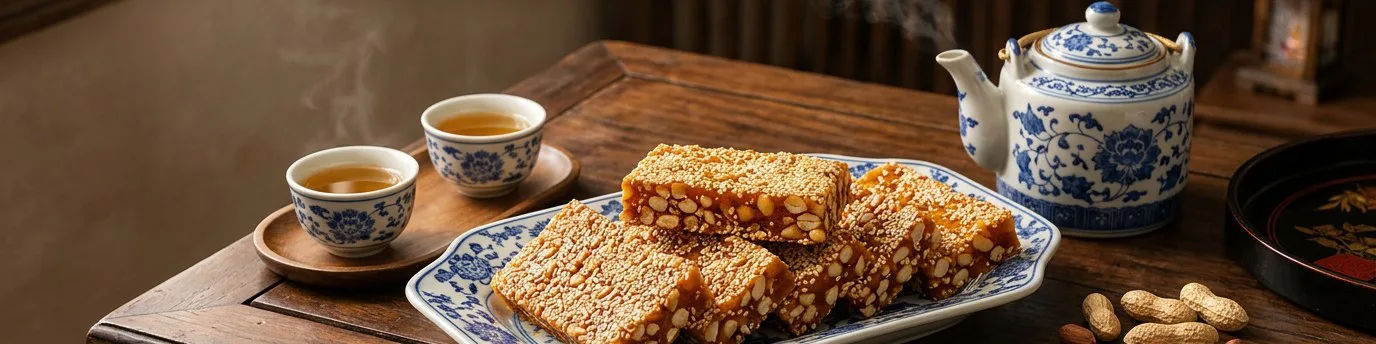
For generations across Vietnam's Red River Delta, Cay cake the pride of Thai Binh has stood as a shining testament to rural culinary ingenuity. Crafted entirely from familiar agricultural harvests grown in fertile alluvial soil, this aromatic confection transforms everyday village ingredients into a gift worthy of emperors and cherished family gatherings alike.
A Fragrant Welcome to Nguyen Village
Visitors arriving in Nguyen village, Dong Hung district—the historic cradle of Thai Binh's pastry craft—are immediately enveloped by the sweet scent of steaming sticky rice, caramelized malt, and candied winter melon drifting from traditional family kitchens. Taking a single bite reveals an extraordinary interplay of flavors and textures: crisp candied winter melon, tender sugar-cured coconut ribbons, nutty roasted peanuts and sesame seeds, and the lively warmth of fresh ginger. Paired with a steaming cup of green tea on a cool morning, the pastry captures the rustic soul of Thai Binh Cay cake in every slice.
Every batch relies on pure, locally sourced farm produce selected with strict care by seasoned village bakers: golden flower glutinous rice, ripe red gac fruit, gardenia seeds, roasted groundnuts, white sesame, sugar-marinated coconut slices, cured pork fat, candied winter melon, golden maltose syrup, and fragrant pomelo blossom essential oil. You can discover more stories about local heritage and culinary traditions in our cultural meaning archive.
Half a Month of Dedication in Every Batch
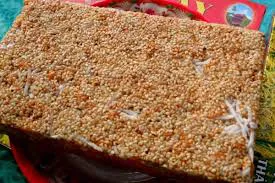
Witnessing the full creation of a perfect bar requires spending half a month in Nguyen village, the minimum time needed to marinate diced pork fat and young coconut flesh in white sugar until every piece becomes translucent, sweet, and crisp. Bakers steam soaked golden flower sticky rice with natural gac and gardenia extracts, pound the warm rice into smooth sheets, dice and dry the cubes, and deep-fry them in oil into crispy golden granules. Meanwhile, whole unhusked glutinous paddy is popped in cast-iron pots into airy white blossoms before being folded by hand with melted maltose, ginger threads, candied fillings, and pomelo blossom oil, then pressed firmly into sesame-lined wooden frames while still hot.
When visitors step inside a multi-generational Nguyen village workshop, they witness artisans working with quiet devotion to achieve the ideal balance—neither too soft nor overly hard—that keeps faithful to ancestral standards. Just as Hai Duong takes pride in mung bean cakes and Bac Ninh treasures conjugal pastries, Thai Binh families pass down this time-honored recipe as a tribute to their rice-farming ancestors. Whether you are searching for a trusted address to buy authentic Cay cake or sharing a box with distant friends, one taste explains why it is difficult to forget the Thai Binh homeland through Cay cake.