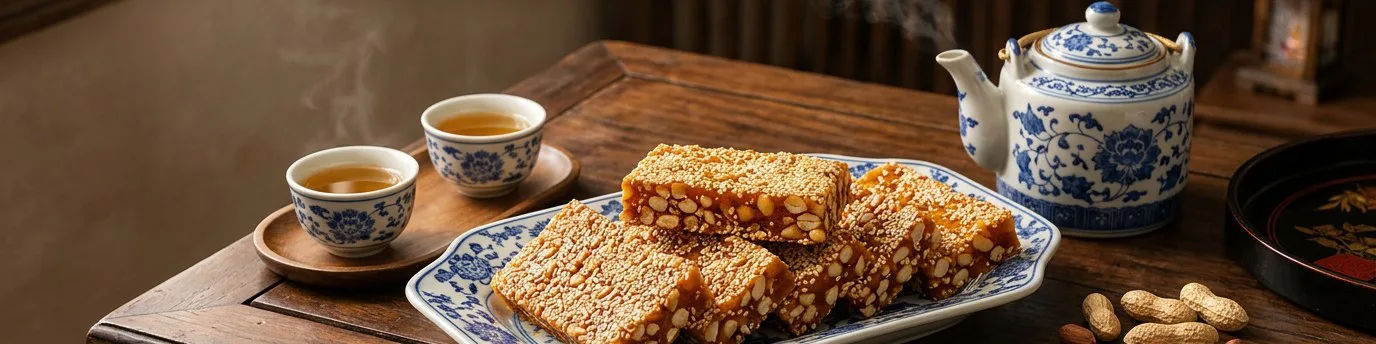
On a brisk winter afternoon, sitting beside a steaming teapot and sharing a plate of thinly sliced Nguyen village pastry is one of northern Vietnam's simplest yet most rewarding pleasures. Understanding the special meaning of Cay cake begins with that sensory harmony: the gentle sweetness of maltose, the rich crunch of roasted peanuts and sugar-cured pork fat, the soft elasticity of popped glutinous rice, and the invigorating heat of fresh ginger that warms the body against the seasonal chill.
A Regional Emblem Rooted in Vietnam's Rice Civilization
Across Vietnam's fertile countryside, thousands of traditional cakes and confections have emerged from wet-rice agriculture. While square glutinous rice cakes and pounded rice cakes represent the entire nation during ancestral ceremonies, other delicacies remain intimately bound to the specific soil and water of their homeland. Just as Hai Duong is celebrated for mung bean cakes, Hue for sesame candy, and Bac Ninh for conjugal pastries, Cay cake belongs unmistakably to the golden rice paddies of Thai Binh province.
Even within Thai Binh itself, connoisseurs agree that the finest bars are crafted by the hereditary artisans of Nguyen village in Dong Hung district. Following National Highway 10 from Thai Binh city to Dong Hung town and turning left onto Highway 39 brings travelers directly into Nguyen village. Although the community has long practiced textile weaving and food processing, only its signature ginger-spiced rice confection earned the honor of serving as an imperial tribute. Village elders still recount how visiting court mandarins and royal envoys carried boxes of Nguyen village pastry back to the capital during major festivals, a tradition celebrated at the ancestral temples of Cay cake.
Intricate Craftsmanship from Humble Farm Harvests
Another layer of the special meaning of Cay cake lies in the extraordinary patience required to transform everyday farm crops into a refined delicacy. While fragrant glutinous rice serves as the backbone of the recipe, bakers combine it with a vibrant array of local ingredients: ripe red gac fruit, gardenia seeds, roasted peanuts, white sesame seeds, candied carrots or winter melon, fresh ginger root, aromatic tangerine peel, and cured pork fat.
- Dual-Colored Rice Granules: Steamed glutinous rice is divided into two halves—one kneaded with gac fruit juice for a warm rose-pink tint, and the other blended with gardenia extract for a bright golden hue. Pounded smooth in a mortar, rolled thin, sliced into narrow strips, dried, and fried in boiling lard, these pieces become crisp, jewel-like pebbles.
- Toasted Grains and Cured Fillings: Whole golden flower glutinous rice is popped in a hot cast-iron pan into snowy white blossoms, while peanuts and sesame seeds are roasted until fragrant. Meanwhile, diced pork fat cured with sugar and a pinch of salt for over two weeks is candied until translucent and crisp alongside sugared carrot strips, shredded ginger, and minced tangerine peel.
- Pressing for Natural Preservation: Warmed together in a pan with sugar and maltose syrup until fragrant, the mixture is packed tightly into sesame-lined wooden molds and compressed into firm rectangular blocks. Remarkably, without sun-drying the finished block or baking it over an oven fire, a properly pressed bar stays fresh for weeks.
Why the Name and Flavor Endure Across Generations
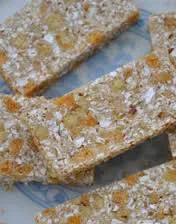
Upon hearing the name Banh Cay, many newcomers assume the pastry is prepared from coastal fiddler crabs. In reality, it is crafted entirely from grains, nuts, plant dyes, and warming spices. Looking closely at a sliced bar, however, one immediately notices how the mottled white, golden, orange, and coral-pink granules resemble tiny clusters of crab roe found along Thai Binh's estuarine mudflats. Others note that in spoken Vietnamese, the word also echoes the pleasant, spicy warmth of fresh ginger that lingers on the palate.
Whether admired for its visual resemblance to coastal crab roe or cherished for its comforting winter heat, you can explore more cultural stories in our traditional meaning archive. Ultimately, this humble confection explains why Cay cake makes travelers passionate and why it stands forever as the enduring pride of Thai Binh people whenever families gather around a warm pot of green tea.