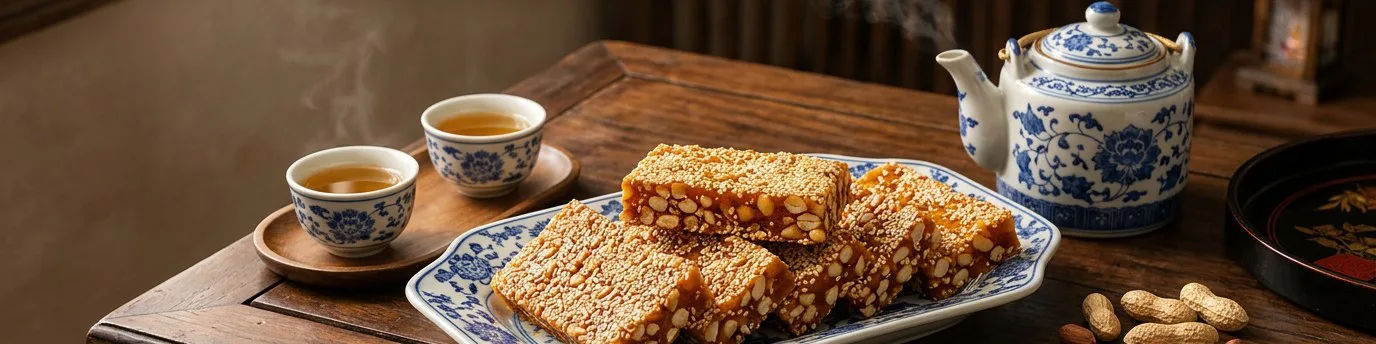
Whenever travelers speak of the fertile plains of Thai Binh province, their minds naturally wander to endless golden rice paddies, the sacred heritage of the Tran Temple complex, and the ancient timber architecture of Keo Pagoda. Yet beyond its historic monuments and agricultural abundance, there is one culinary treasure that no visitor can ever forget: the authentic Cay cake of Nguyen village in Thai Binh. Crafted with patience and devotion, this aromatic pastry captures the true spirit of Vietnam's northern delta homeland.
Entering the Homeland of Water Puppetry and Royal Confections
Even without boundary signs or roadside inquiries along the winding highways leading past Nam Dinh across the Red River, travelers immediately know when they have stepped foot onto Thai Binh soil. Rows of welcoming local shops line the avenues, displaying neatly wrapped boxes of golden, sesame-coated confections. These fragrant gifts are born from the skillful hands of artisans in Nguyen village, located within Nguyen Xa commune, Dong Hung district, Thai Binh province.
To reach this historic craft village from Thai Binh city center, visitors travel approximately ten kilometers along National Highway 10 before turning onto Highway 39 toward Nguyen Xa. This culturally vibrant community is celebrated across Vietnam not only as one of the original cradles of traditional water puppetry, but also as the birthplace of the famous Nguyen village royal tribute Cay cake once presented to the imperial court.
Folklore and Royal Heritage Behind the Name
Village elders recount that households in Nguyen Xa have practiced this distinctive baking craft for centuries. Originally, families prepared the confection primarily to celebrate the Lunar New Year and honor their ancestors during seasonal festivals. According to local historical lore, during a Canh Ty year many generations ago, a high-ranking mandarin visited the region. Moved by the hospitality of the farmers, villagers presented him with boxes of their homemade ginger and sticky rice pastry as a humble token of respect.
Impressed by its chewy texture and warming aroma, the mandarin brought the delicacy back to the capital and offered it to the Emperor. Upon tasting the treat, the monarch praised its remarkable balance of flavors and inquired about its name. Noticing the lively warmth of fresh ginger infused throughout the sweet grain, the mandarin replied that it was a spicy country cake. From that moment onward, the reputation of the pastry spread across every province, and locals also began venerating the founder of the craft at the historic ancestor temple of Cay cake.
Another beloved village legend tells of a devoted female artisan rewarded by the royal court for her culinary mastery. Following a vivid dream of the open sea, she dedicated her final years to teaching every household in Nguyen Xa the exact proportions of roasted grain, candied pork fat, and ginger juice so the community would always prosper. When she departed this world near the coast, villagers say the gentle tide parted to welcome her spirit home, cementing the confection as a sacred gift uniting land, sea, and human devotion.
Meticulous Ingredients and Multi-Stage Preparation
Transforming simple farm harvests into an unforgettable delicacy requires an intricate, multi-step culinary process. Every batch begins with selecting premium Nep Cai Hoa Vang (golden flower glutinous rice) alongside a harmonious medley of secondary ingredients:
- Ripe gac fruit arils and natural gardenia seeds for vibrant crimson and golden hues.
- Plump local peanuts and white sesame seeds for nutty crunch and fragrance.
- Cured pork fat, candied winter melon, fresh garden carrots, and aromatic old ginger.
- Sun-kissed tangerine peel and pure cane sugar syrup or golden malt.
First, the glutinous rice is divided into three distinct portions. The first portion is steamed with ripe gac fruit to achieve a rich vermilion color, while the second is infused with gardenia extract to create a bright, sunny yellow. Both steamed portions are pounded in stone mortars until smooth, rolled flat, sliced into slender strips resembling candied winter melon, and gently dried before being crisped in warm oil. The third portion of glutinous paddy is dry-roasted in deep cast-iron pans until the husks pop open into snowy, fragrant blossoms known locally as bong.
Meanwhile, pork fat is salted and marinated in sugar for fifteen days until translucent, then finely diced and simmered until crisp and savory-sweet. Peanuts and sesame seeds are roasted until golden and rubbed clean of their skins, while shredded carrots and minced ginger are caramelized in cane sugar alongside fragrant strips of fresh tangerine peel.
Molding, Pressing, and the Art of Tasting
Once every component is prepared, the master baker blends the crisped rice strips, popped grain blossoms, candied fat, peanuts, and ginger-infused syrup in a large heated wok. While the mixture is still steaming and pliable, it is poured into rectangular wooden frames lined generously with toasted sesame seeds. Artisans compress the warm mass firmly so the ingredients bind together without becoming hard, ensuring every slice is coated in an even blanket of fragrant sesame.
Today, modern mechanical mixers and pressing frames assist bakers in Nguyen village with heavy labor, yet the heart of the craft still relies on human intuition. Bakers carefully monitor the temperature and sugar concentration so the finished bar remains pleasantly chewy, moderately sweet, never burnt, and never dry. Readers who wish to explore further stories about traditional village delicacies can browse our cultural meaning and heritage archive for deeper insights.
When chilly autumn or winter breezes sweep across the northern plains, nothing compares to gathering with family and lifelong friends around a steaming pot of green tea. Slicing a plate of authentic Cay cake of Nguyen village in Thai Binh reveals a mosaic of colors and textures—crisp popped rice, rich candied fat, nutty sesame, and the unmistakable warmth of spicy ginger—reminding every generation of the enduring generosity and industrious spirit of Vietnam's rice paddy homeland.
To learn more about our editorial curation and research standards, visit our comprehensive site mission and archive overview.