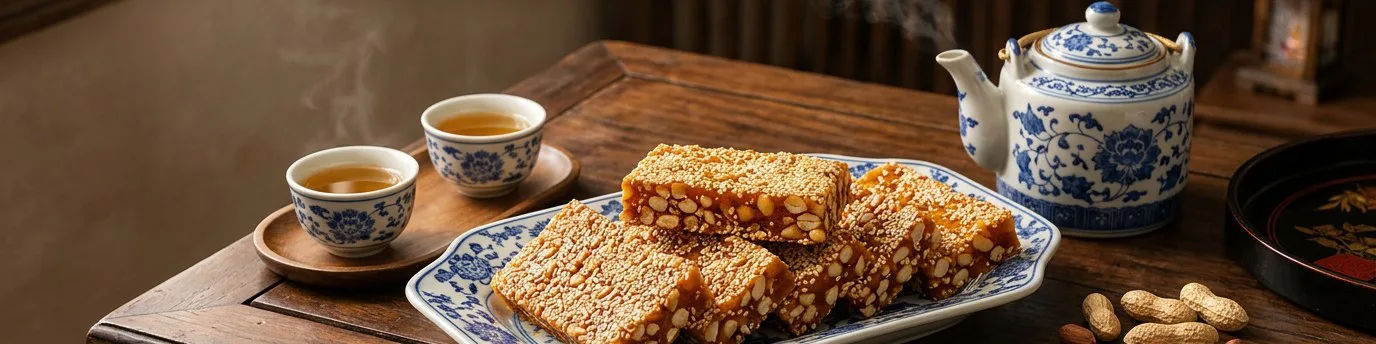
For generations, the traditional pastry crafted in Nguyen Village (Nguyen Xa Commune, Dong Hung District, Thai Binh Province) has been celebrated as the culinary pride of Vietnam's rice-growing heartland. Thanks to a baking heritage spanning more than two centuries, hundreds of rural households have built prosperous livelihoods and lifted their families out of hardship. Yet in an increasingly competitive retail environment where individual workshops operate independently, local producers and authorities recognize that establishing a unified Cay cake Thai Binh brand is essential to protect quality standards and unlock national and export markets. You can follow ongoing updates on rural craft initiatives in our Thai Binh specialty news archive.
The Enduring Vitality of a 200-Year-Old Craft Village
Nguyen Xa Commune is famous across Vietnam not only for its heroic resilience during the resistance years and its celebrated water puppetry troupes, but also for its dynamic rural economy after peace was restored. Over recent decades, residents have diversified into textile weaving, fine woodworking, mechanical fabrication, and construction materials. Despite the rise of modern industries, traditional Banh Cay making remains the commune's most iconic and sustainable livelihood. Today, approximately 128 households participate in the craft, providing regular and seasonal employment for more than 600 rural workers and generating tens of billions of Vietnamese dong in annual revenue.
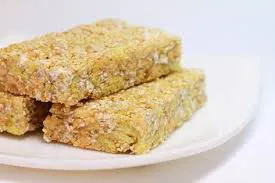
Creating a truly memorable pastry demands unwavering devotion from master bakers, starting with the careful selection of farm-fresh ingredients: fragrant nep cai hoa vang glutinous rice, roasted peanuts, white sesame seeds, ripe gac fruit, gardenia berries, shredded carrot, candied citrus peel, rock sugar, golden malt syrup, and fresh ginger. When blended over a gentle fire, these humble crops unite the five traditional culinary harmonies—chewy glutinous rice, crisp puffed petals, tender candied root strips, warm spicy ginger and tangerine zest, and the mellow sweetness of malt. Wrapped neatly in crimson paper as a former royal tribute, the confection inspired the enduring folk couplet praising Nguyen Village both for its ancient water puppets and for the royal cakes presented to the king.
Royal Roots Documented in Clan Chronicles
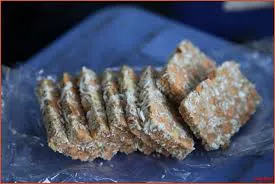
According to historical records preserved by Nguyen Ba Duy, a fourteenth-generation descendant of the Nguyen Cong clan, the pastry evolved from rustic che lam through the ingenuity of Lady Nguyen Thi Tan (born in 1725 in the sixth generation of the Nguyen Cong lineage in Nguyen Xa Village, Tien Hung Prefecture). Gifted with exceptional intelligence and devotion, she served as a royal instructress and nursemaid in the Later Le court, sheltering the young sons of Crown Prince Le Duy Vy during turbulent years. Studying the complete history of Cay cake in Nguyen Village reveals how the king himself named her five-colored creation Banh Cay because its speckled red, yellow, and white cross-section resembled coastal crab roe. From the imperial palace, the recipe returned to her hometown and flourished into a beloved regional specialty.
Why a Protected Collective Trademark Matters Today
Along National Highway 10—the bustling gateway connecting Thai Binh City with neighboring provinces—hundreds of roadside shops display colorful stacks of Banh Cay boxes. While this abundance makes Thai Binh Cay cake a cherished gift for every household, travelers frequently struggle to distinguish authentic Nguyen Xa craftsmanship from low-cost imitations. Veteran baker Nguyen Duy Thang, owner of the Hoang Thang workshop in Bac Lang Hamlet with over thirty years of experience, expressed deep concern over look-alike packages that copy famous village workshop names while substituting cheap puffed cereal and ordinary roasted rice. Although those subpar imitations cost only 3,000 to 4,000 dong per box to produce, unscrupulous sellers retail them for 15,000 to 20,000 dong, eroding consumer trust in the authentic characteristics of traditional Cay cake.
Without a registered collective trademark or geographical indication, reputable family workshops such as Hoang Thang, Minh Hoa, and Nguyen Tu have faced barriers when attempting to place their products into major supermarket chains or fulfill international export orders. Nguyen Nhu Hung, Vice Chairman of the Nguyen Xa Commune People's Council, noted that while 18 large workshops operate year-round and up to 70 facilities run at full capacity during the Lunar New Year season, many younger residents now prefer steady factory jobs in industrial parks. Establishing a formal craft village association and a shared Cay cake Thai Binh brand is therefore vital to safeguard genuine artisans against unverified imitation goods and ensure strong economic returns for future generations.
Overcoming Fragmentation Through Cooperative Standards
As Bui Van Duyet, Deputy Head of the Dong Hung District Department of Industry and Trade, explained, provincial authorities first initiated plans to register a collective trademark for Nguyen Village Banh Cay in 2010. Progress initially slowed because many family workshops guarded their own subtle recipe variations—such as the exact ratio of roasted golden flower glutinous rice to ginger juice or the curing duration of candied pork fat—and preferred competing individually rather than sharing a unified label. Despite repeated surveys and mobilization campaigns by district and commune officials encouraging households to form a joint production association, several workshop owners hesitated to look beyond short-term family sales.
However, experience in the marketplace has shown that fragmented, small-scale production makes it harder for both traditional bakers and discerning consumers to thrive. When every household operates in isolation, buyers cannot easily verify authenticity, and genuine producers lack the collective bargaining power needed for modern retail distribution. For a 200-year-old craft village to stand firm against rising market competition, local enterprises must place long-term shared reputation above spontaneous, divided growth. By uniting under transparent food safety certification, standardized packaging labels, and a protected collective emblem while still honoring each family's artisan touch, Nguyen Village can preserve its ancestral legacy and carry the pride of Thai Binh cuisine to tables worldwide.