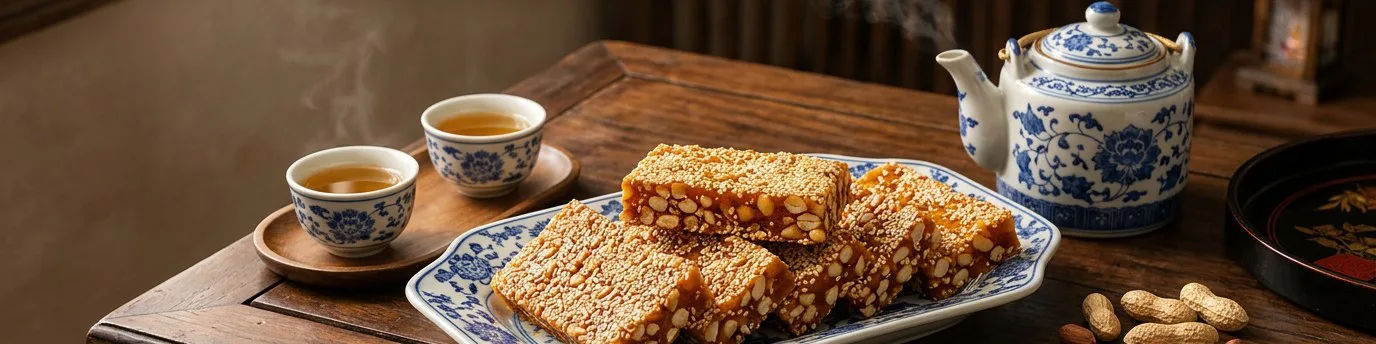
Exploring the history of Cay cake Nguyen village takes us back several centuries to a time when rural families in Dong Hung District, Thai Binh Province prepared a special ginger-spiced confection exclusively for Lunar New Year celebrations and ancestral offerings. Over the generations, what began as a humble homemade holiday treat evolved into a celebrated royal tribute pastry admired across Vietnam.
Folk Legends and Royal Court Recognition
Oral traditions preserved by village elders recount that during the Canh Ty year of the feudal era, a high-ranking royal envoy traveled through Nguyen village on an official mission. Welcoming the guest with warm countryside hospitality, villagers presented him with parcels of their homemade holiday pastry. Impressed by its rich aroma and warming spice, the mandarin brought the confection back to the capital and offered it to the King.
Upon tasting the golden, chewy slice, the monarch praised its distinctive harmony of sweet malt and pungent ginger, inquiring about its name. Because villagers simply called it their local spicy cake, the court initially knew it by that modest description, and the King generously rewarded the women of Nguyen village for their culinary artistry. Combined with the historical documentation of Imperial Consort Nguyen Thi Tan introducing the five-spice pastry to King Le Hien Tong in the eighteenth century, these stories explain why families always introduce Cay cake as a royal heritage specialty to visiting guests.
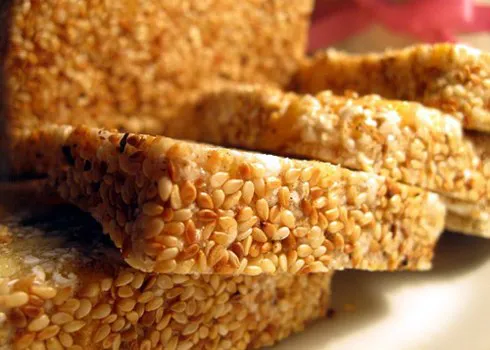
Over the decades, the name Banh Cay became permanently linked to the speckled appearance of the sliced confection, whose crimson, yellow, and creamy-white grains resemble coastal fiddler crab roe, as well as the deep gratitude villagers felt toward their ancestors who pioneered the craft. Today, you can explore many more stories of these early artisans in our traditional village introduction archive.
Sophisticated Three-Part Glutinous Rice Craftsmanship
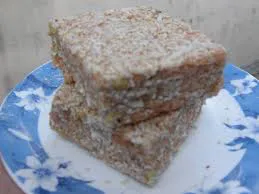
As time passed, this ancestral creation blossomed into the signature culinary emblem of Thai Binh—Vietnam's famed homeland of rice. Crafting an authentic batch requires a sophisticated, multi-step process that begins with selecting premium golden-flower glutinous rice alongside gac fruit, gardenia seeds, peanuts, sesame seeds, carrots, fresh ginger, dried tangerine peel, and cured pork fat.
In traditional Nguyen village workshops, artisans divide the glutinous rice into three distinct portions, each undergoing a completely different transformation:
- The crimson gac portion: Steamed with ripe gac fruit arils to achieve a deep ruby-red hue before being pounded, sliced thin like candied winter melon, dried, and puffed in hot oil.
- The golden gardenia portion: Steamed with natural gardenia fruit extract to create a bright sunny yellow dough, which is likewise pounded smooth, thinly sliced, dried, and fried until airy and crisp.
- The popped rice flour portion: Whole glutinous paddy grains are dry-roasted in cast-iron woks until they burst into fragrant white blossoms, husked clean, and ground into a delicate binding powder.
Alongside the three rice preparations, artisans roast and hull peanuts and sesame seeds until golden and aromatic. Choice pork fat is cured with cane sugar for fifteen days, finely diced, and candied until translucent and crunchy, while shredded carrots and aromatic tangerine peel are gently simmered in ginger-infused sugar syrup.
Modern Support and Timeless Hometown Flavor
Once every ingredient is ready, the master baker heats cane sugar and malt syrup in a large wok, folds in the three glutinous rice components with the candied fruits and nuts, and presses the piping-hot mixture into wooden frames lined with toasted sesame seeds. Although modern mechanical mixers and pressing tools now assist artisans with heavy physical labor, Nguyen village bakers still rely on seasoned intuition to balance the sweetness and keep the texture supple without ever scorching or drying out the batch.
When autumn breezes turn crisp and winter chill settles over the countryside, serving a plate of Cay cake during Tet celebrations of Thai Binh people brings unmatched warmth to the family table. Biting into a slice of special Cay cake from Thai Binh reveals a gentle chewiness, nutty roasted sesame, sweet candied winter melon, and the bold, invigorating heat of fresh ginger. Paired with a steaming cup of slightly bitter green tea, every piece captures the fertile fragrance of the rice fields and the enduring devotion of Nguyen village artisans.