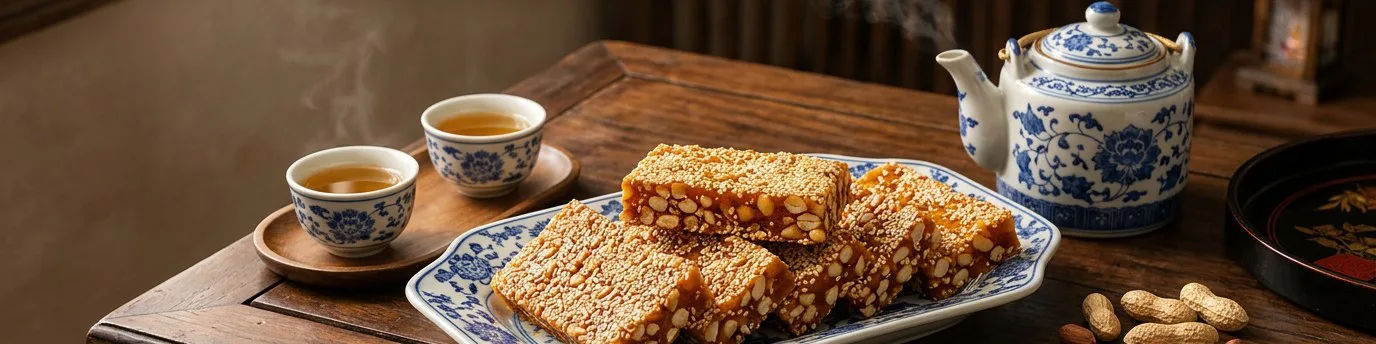
Among the rustic delicacies of northern Vietnam's rice paddy heartland, few confections rival the complexity and heritage of Thai Binh's signature ginger-sesame pastry. Even within Thai Binh province itself, connoisseurs agree that the most fragrant and balanced batches come from the master bakers of Nguyen village in Dong Hung district. Preserving the traditional Cay cake making method across generations has allowed this humble countryside community to turn everyday agricultural harvests into a delicacy once worthy of imperial kings.
Journey to the Craft Cradle of Nguyen Village
Traveling from Thai Binh city along National Highway 10 toward Dong Hung town and turning left onto Highway 39 brings visitors directly into Nguyen Xa commune, the ancestral home of the craft. For centuries, families here have excelled in traditional weaving and culinary arts, honoring their founders at the sacred ancestor temples of Cay cake. While many local dishes remain everyday staples, only this jewel-toned confection earned a place as a royal tribute.
Selecting and Preparing Natural Ingredients
Mastering the traditional Cay cake making method begins with gathering pure, farm-fresh ingredients. Unlike simple steamed rice cakes, this recipe brings together a diverse ensemble of grains, fruits, nuts, and spices:
- Primary Grain: Fragrant golden flower glutinous rice (Nep Cai Hoa Vang), prized for its natural sweetness and supple elasticity.
- Natural Botanical Dyes: Ripe gac fruit arils for a festive coral-red hue and crushed gardenia seeds or leaves for a warm golden-yellow tone.
- Aromatics and Crunch: Plump peanuts, white sesame seeds, sugar-cured pork fat, candied carrots, fresh ginger juice, and finely shredded tangerine peel.
First, the glutinous rice is divided into separate batches. Two portions are soaked and steamed—one blended with fresh gac fruit pulp to create a rosy crimson rice, and the other infused with gardenia extract for a bright yellow batch. Both steamed rice batches are pounded thoroughly in a mortar until smooth and elastic, exactly like traditional pounded sticky rice cakes. The dough is then rolled into flat sheets, sliced into slender matchsticks resembling pumpkin jam, sun-dried until firm, and gently fried in hot oil until light and crispy.
A third portion of unhusked glutinous paddy is dry-roasted over steady heat until the grains pop open into snowy white blossoms, after which the husks are carefully winnowed away. Meanwhile, pork fat that has been cured in sugar for two weeks is diced into tiny cubes and simmered until translucent and crisp. Peanuts and sesame seeds are dry-roasted until aromatic and rubbed clean of their skins, while shredded carrots are glazed in sugar syrup alongside spicy ginger extract and fragrant citrus zest. For practical home tips, readers can also review our guide on how to make delicious Thai Binh Cay cake.
Caramelizing, Wooden Mold Pressing, and the Origin of the Name
In the final stage of the traditional cake-making process, the artisan heats cane sugar and malt syrup in a deep pan until it forms golden threads, then folds in the crispy colored rice sticks, popped rice blossoms, candied pork fat, roasted peanuts, ginger, and tangerine peel. Once thoroughly coated and aromatic, the hot mixture is transferred into rectangular wooden molds lined with toasted sesame seeds. Heavy wooden presses compact the mixture firmly so it binds into a cohesive block before cooling and slicing.
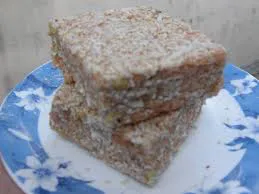
When stored properly in airtight wrapping, authentic Thai Binh specialty Cay cake stays fresh and chewy for weeks without artificial preservatives or sun-drying. Visitors hearing the name for the first time often wonder whether the pastry contains coastal fiddler crabs (con cay). In fact, the confection is made entirely from grains, nuts, and botanical extracts; however, when sliced open, the speckled mosaic of crimson, gold, creamy-white, and orange closely resembles colorful crab roe, while its lively ginger warmth (cay in Vietnamese) gives the pastry a dual meaning celebrated across the delta.