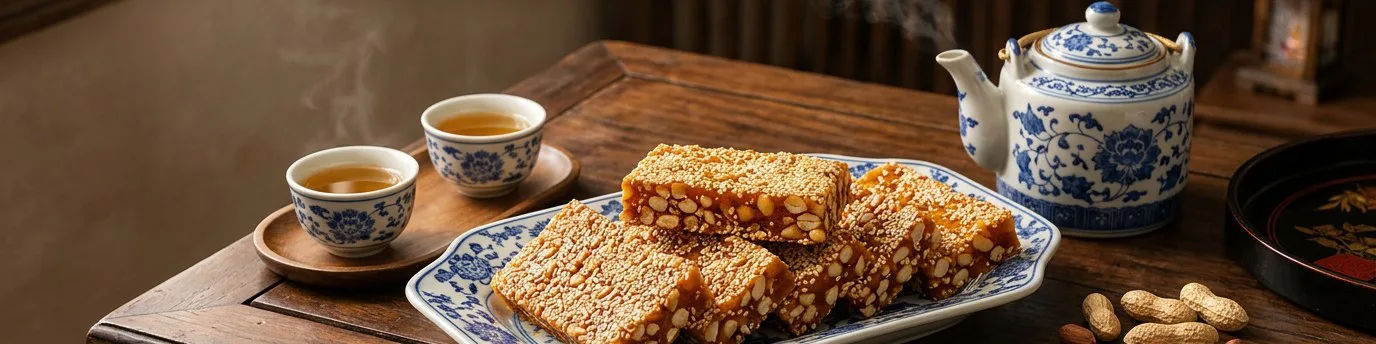
When locals introduce Cay cake to travelers visiting the Red River Delta, they proudly present a traditional folk confection shaped by the deft hands of artisans in Nguyen village, Nguyen Xa commune, Dong Hung District, Thai Binh Province. Served in neat rectangular slices alongside a pot of steaming green tea, the pastry delivers a harmonious balance of gentle sweetness, nutty richness, crisp rice puffs, and supple, chewy malt. Especially on chilly winter evenings, the natural warmth of fresh ginger leaves guests feeling thoroughly comforted and refreshed.
Why the Pastry Is Named After the Coastal Fiddler Crab
In centuries past, this rustic village creation was revered as a prized royal tribute delicacy presented to the Vietnamese court on behalf of Thai Binh Province. For first-time visitors browsing our cultural introduction archive, the name Banh Cay often sparks curiosity. Because con cay refers to the small fiddler crab inhabiting brackish coastal flats, some travelers assume the cake contains crab roe or marine ingredients.
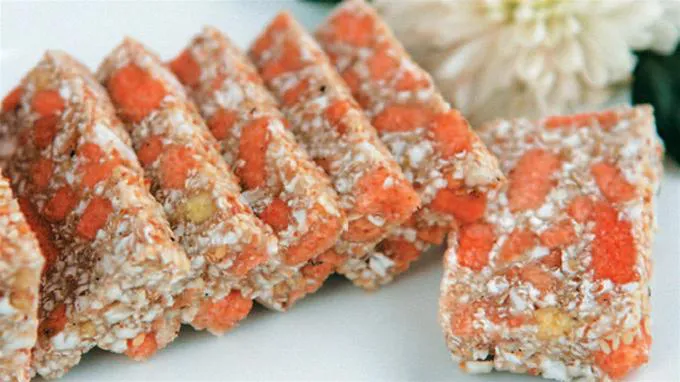
In reality, authentic Cay cake is crafted purely from local farm harvests: fragrant glutinous rice, roasted peanuts, white sesame seeds, and natural botanical colorings extracted from gardenia seeds and ripe gac fruit. However, once the finished slab is sliced open, the mosaic of golden yellow, coral pink, and creamy-white rice crisps suspended in amber malt closely resembles clusters of tiny fiddler crab eggs. As documented in the history of Cay cake in Nguyen village, King Le Hien Tong noticed this striking visual resemblance in the eighteenth century and bestowed the memorable name that endures today.
A Symphony of Carefully Treated Farm Ingredients
The unmistakable appeal of a delicious Cay cake of Thai Binh lies in how artisans transform everyday field crops into a layered culinary experience. Master bakers begin by selecting plump, round grains of golden-flower glutinous rice (nep hoa vang), ripe crimson gac fruit, gardenia pods, peanuts, sesame seeds, diced pork fat, sugar-marinated coconut ribbons, candied winter melon, malt syrup, fresh carrots, tangerine peel, and fragrant pomelo blossom oil.
Every single component undergoes specialized preparation before assembly:
- Colored glutinous rice crisps: Steamed glutinous rice is divided into two batches—one tinted coral red with gac fruit pulp and the other dyed bright yellow with gardenia water. Both batches are pounded until elastic like rice cake dough, rolled flat, sliced into thin strips, dried thoroughly, and flash-fried in hot lard until they puff into light, crispy sticks.
- Popped rice blossoms and roasted seeds: Additional golden-flower glutinous paddy is dry-roasted until the grains burst into fragrant white blossoms, husked clean, and ground fine, while peanuts and sesame seeds are toasted and rubbed free of skins.
- Candied pork fat and aromatics: Diced pork fat is cured in sugar and a pinch of salt for more than two weeks before being simmered until translucent and crisp, accompanied by shredded carrots, ginger juice, and fresh tangerine peel cooked in sweet syrup.
Pressing, Preserving, and Sharing the Warmth
Once all prepared components are folded into bubbling malt and cane sugar syrup over a gentle flame, artisans pour the fragrant mixture into sesame-lined wooden frames. Pressed firmly until compact and cooled, the golden blocks are sliced and wrapped without requiring artificial preservatives or oven drying, staying fresh for weeks when stored properly. Today, whether you visit Dong Hung in person or look for tips on buying authentic Cay cake from Thai Binh in Ha Noi, each slice carries the heartfelt devotion of Nguyen village craftspeople.